
Getting Clients
Cold Email for Freelancers: A Complete Guide With Templates That Get Replies
How to research prospects, write short personal cold emails, follow up without being annoying, and track results — with four templates you can adapt today.
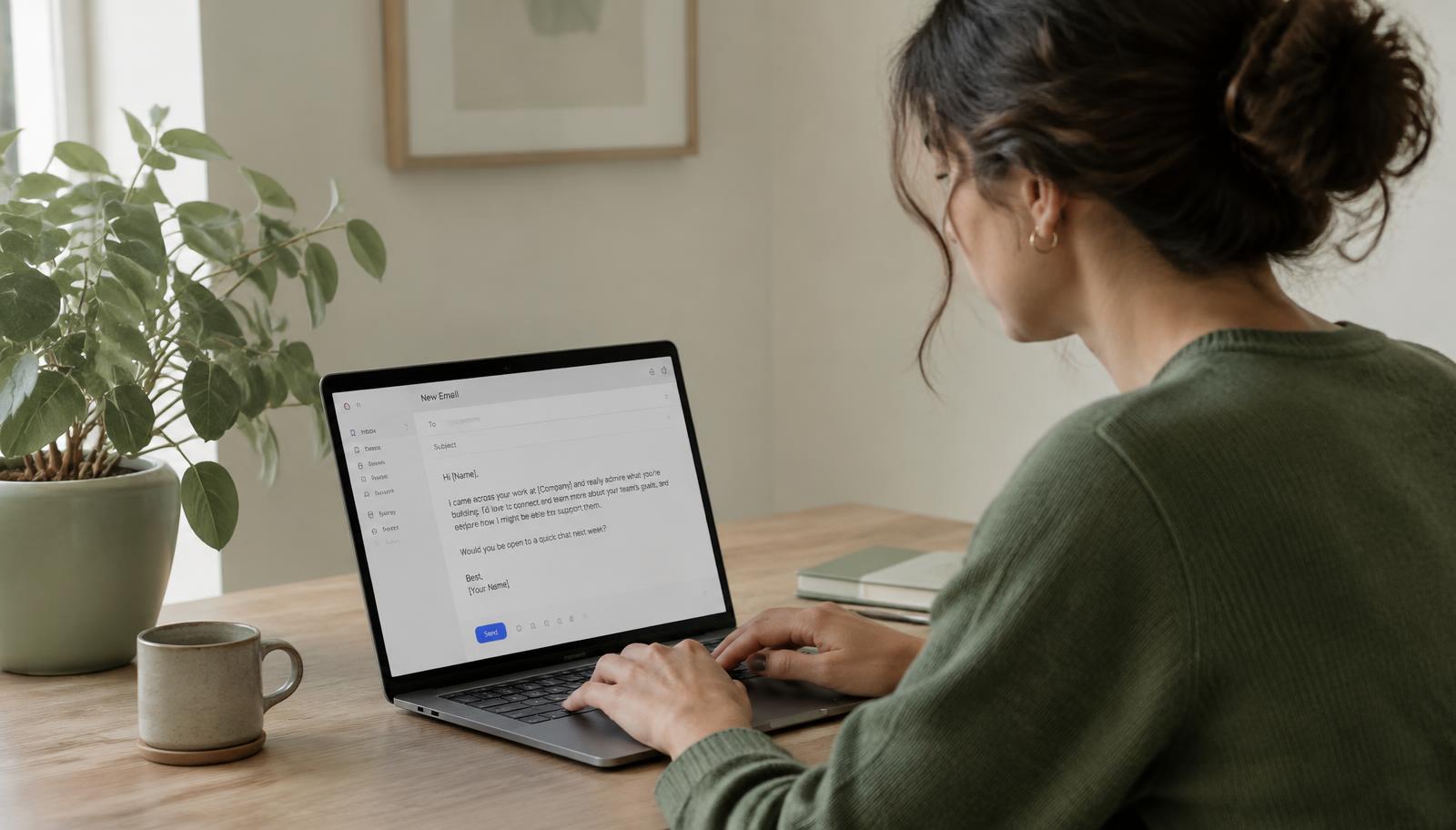
Cold email has a bad reputation, mostly because most cold email is bad. It is long, generic, obviously sent to thousands of people, and it asks for something big from a stranger. Done well, cold email is one of the most reliable ways for a new freelancer to start conversations with businesses that actually need help — without waiting for a marketplace algorithm to notice you.
This guide walks through the whole process: choosing who to contact, finding a real reason to write, structuring a short message, following up, and measuring what works. You will also find four templates at the end. Treat them as starting points, not scripts.
Why cold email still works
Business owners and managers are busy, but they are also constantly dealing with problems they have not had time to fix: a slow website, an outdated brochure, a social account nobody posts on, a sales process held together with spreadsheets. A short, relevant email that points at one of those problems and offers a concrete next step is genuinely useful to them.
Cold email also gives you control. On marketplaces you compete on price with hundreds of other people for the same job post. With outreach, you choose the clients, you decide the angle, and you are often the only person offering help at that moment.
Step 1: Pick a narrow list of prospects
The biggest mistake is emailing "anyone who might need a website". Narrow lists produce better emails because you can speak to a specific situation. Good ways to narrow:
- Industry: dental clinics, independent gyms, accounting firms, local restaurants, B2B SaaS startups.
- Location: your city or region, which gives you something in common immediately.
- Trigger: businesses that just raised funding, opened a new branch, launched a product, or are hiring for a role related to your skill.
Start with 30 to 50 prospects. That is enough to learn from, and small enough that you can research each one properly.
Step 2: Research for one real observation
Before writing, spend five minutes per prospect looking for a single specific, honest observation. For example:
- Their contact form returns an error on mobile.
- Their latest blog post is from 2022.
- They post on Instagram but the link in their bio goes to a broken page.
- Their pricing page does not mention the service their reviews praise most.
This observation is the heart of the email. It proves you looked, and it gives the reader an immediate reason to care. Never invent a problem and never exaggerate; if you cannot find anything worth mentioning, move on to the next prospect.
Step 3: Find the right person
Email the person who owns the problem. In small businesses that is usually the founder or owner. In larger companies, look for titles like marketing manager, head of growth or operations lead. The company website, LinkedIn and the "About" page are usually enough. Avoid generic inboxes like info@ when you can, but do not use scraping tools that break a site's terms or privacy rules.
Step 4: Write a short, specific email
A good cold email fits on a phone screen without scrolling. A reliable structure:
- Personal opening (1 sentence) — the observation you found.
- Why it matters (1–2 sentences) — the likely cost to them, in plain language.
- Credibility (1 sentence) — a relevant result, project or skill.
- Low-friction ask (1 sentence) — a question that is easy to answer.
Keep the subject line short and plain, like "Quick note about your booking form". Avoid clickbait, fake "Re:" prefixes and all-caps. Those tactics may raise open rates but they destroy trust.
Step 5: Make the ask small
Asking a stranger for a 45-minute call is a big request. Asking "Would it help if I sent a two-minute video showing the fix?" is easy to say yes to. Small asks build momentum, and the follow-up conversation is where you can talk about scope and price.
Step 6: Follow up — politely, twice
Many replies come from the second or third message, simply because people were busy the first time. A sensible rhythm:
- Day 0: first email.
- Day 3–4: short follow-up adding one useful detail.
- Day 8–10: final note that closes the loop gracefully.
After that, stop. Respect "no" immediately, and always honour any request not to be contacted again.
Step 7: Stay on the right side of the rules
Cold outreach is regulated in many places. In general: use your real name and business, include a way to opt out, do not use misleading subject lines, and send to business addresses for business purposes. Rules differ by country (for example CAN-SPAM in the US and GDPR/PECR in the UK and EU), so check the rules that apply to you. This article is not legal advice.
Send from a normal mailbox at a modest volume — a few dozen personal emails a day — rather than blasting hundreds. That protects your domain reputation and keeps the quality high.
Step 8: Track and improve
Use a simple spreadsheet with columns for company, contact, observation, date sent, follow-ups, reply and outcome. After 30 to 50 emails, look at the numbers. A reply rate under 5% usually means the list or the observation is weak. A good reply rate but no projects usually means the offer or the next step needs work.
Four templates you can adapt
Template 1: The specific fix
Subject: Your booking form on mobile
Hi Sarah, I tried booking a class on your site from my phone and the form wouldn't submit after choosing a time. That probably means some mobile visitors give up before booking. I build and fix websites for independent fitness studios, and this kind of issue is usually a quick repair. Would it help if I sent a two-minute video showing what's happening?
Template 2: The idea
Subject: An idea for your newsletter
Hi Daniel, I noticed your clinic shares great patient tips on Instagram, but there's no email signup on the website. A simple monthly newsletter could bring past patients back for check-ups. I write email campaigns for healthcare practices. Want me to sketch out what the first issue could look like?
Template 3: The local connection
Subject: Fellow Nairobi business
Hi Amina, I'm a web designer based nearby and walked past your new café last week. Your Google profile doesn't have a menu or photos yet, which is often the first thing people check. I'd be happy to share three quick improvements — no strings attached. Interested?
Template 4: The polite follow-up
Subject: Re: Your booking form on mobile
Hi Sarah, just bringing this back to the top of your inbox. I also noticed the confirmation email goes to spam in Gmail — easy to fix at the same time. If now isn't a good moment, no problem at all.
Common mistakes to avoid
- Talking about yourself for three paragraphs before mentioning their business.
- Attaching a PDF portfolio to a first email (it can trigger spam filters).
- Sending the same template to everyone with only the name changed.
- Giving up after one email, or following up endlessly.
Key takeaways
Cold email works when it is narrow, specific, honest and short. Pick a focused list, find one real observation per prospect, make a small ask, follow up twice, and track the results. Fifty thoughtful emails will teach you more — and win you more work — than five hundred generic ones.
Related articles

How to Find Your First Freelance Client: A 7-Day Outreach Plan
A focused week of choosing an offer, finding relevant prospects and starting useful conversations—without mass messaging or promising instant results.
October 14, 2026 · 7 min read
Newsletter
One practical client-getting idea, every week
No spam. Unsubscribe anytime.